Projects

View:
Project preview Project Name: Vazna Office Building
2021

Project Name: Vazna Office Building

Location: Tehran, Kamranieh

Year: 2021

Project Type: Renovation
Area: 720 square meters
Year: 2021
Architect and Supervisor: Vazna Consulting Engineers
Project Summary:
Nowadays, renovation is not just about changing the appearance of a building like wall colors or decorations.
Over time, the main needs of buildings have changed in our country
One of the most important needs today is the efficiency of buildings in terms of energy use and the quality of interior space relationships
The architect of this project aimed to improve the building performance to its highest potential while keeping the main structural system
Design Idea:
The design focuses on the use of natural light through large full-height windows on the facade
A glass pyramid under the central patio brings daylight into darker interior spaces
A new metal staircase connects to a meeting room, creating more interaction between different floors and redefining interior spaces
The renovation also affects the building facade and roof, giving it a new identity
The parking space was expanded and the roof of the top floor redesigned
These changes help increase energy efficiency and support greater use of solar energy.
Project preview Project Name: Akash Building
2024

Project Name: Akash Building

Project Location: Tehran, District 22, Tehran Municipality

Year: 2024

Project Type: Phase 1 and 2 Design
Area: 26,700 square meters
Year: 2024
Supervisor: Vazna
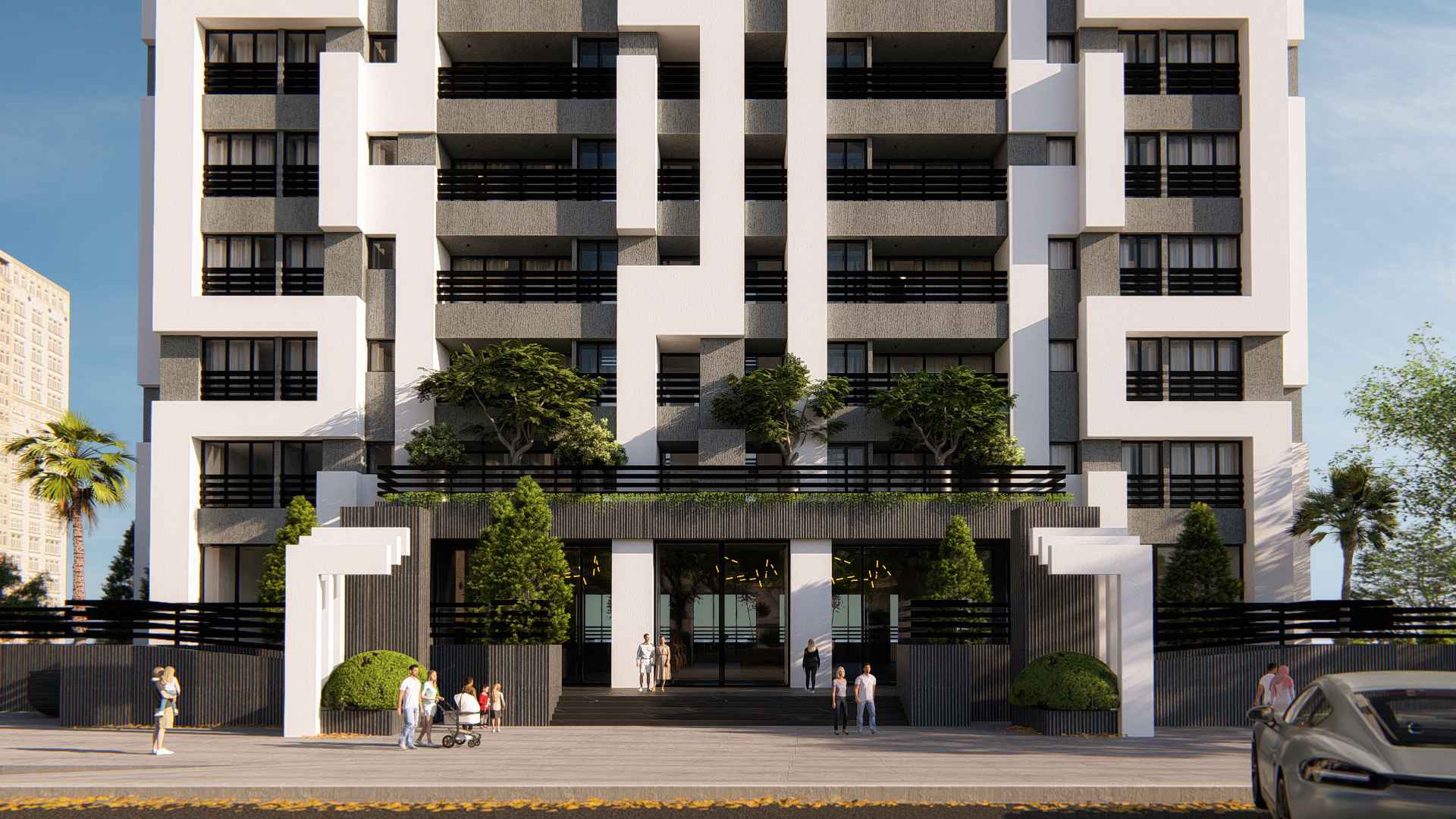
The Akash Residential Complex is founded on the principle of providing residential spaces that are harmonious with the climatic conditions, particularly regarding sun exposure, while maintaining a modern and cohesive design for the building's mass and façade.
________________________________________
Climatic Design Strategy
• To achieve this goal, the east and west façades are designed as solid, enclosed envelopes with minimal openings to effectively control direct sunlight.
• Conversely, the north and south elevations, considering both climate and the need to capture views, feature large glazing areas, expansive openings, and long, broad balconies. This maximizes the entry of natural light and views, as well as facilitating natural cross-ventilation to ensure comfort within the interior spaces.
________________________________________
Architectural Concept
The concept for the residential complex envisions the apartments as individual units clustered together, similar to beads strung along a single thread, creating a cohesive, unified volume. In this context, the façade skins act as the connecting element between the units. This movement of the façade skins—rising from the base of the building toward the sky—symbolizes the connection between each stacked apartment. Furthermore, these skins serve to mitigate intrusive sunlight from the east and west.
________________________________________
Detailing and Connection to Site
• The use of balconies and deep recesses on the north and south elevations is instrumental in controlling incoming light.
• The visual contrast between white and grey materials is employed to enhance the perception of shadow and light on the building's form and surface.
• The entire residential tower is set upon an elevated podium (plinth) that projects out from the ground, acting as the primary link between the tower and the earth.
• The fluid movement of the façade skins continues from the podium, through a roof overhang that connects with the sky. This same fluid vertical movement extends the connection from the landscaped area on the podium up to the floor balconies and ultimately culminates in the project's green roof.
Project preview Project Name: Commercial-Administrative Building of Chitgar Lake
2019

Project Name: Commercial-Administrative Building of Chitgar Lake

Project Location: Tehran, beside Chitgar Lake and Bam Land

Year: 2019

Project Type: Phase 1 Design
Area: 125,000 square meters
Year: 2019
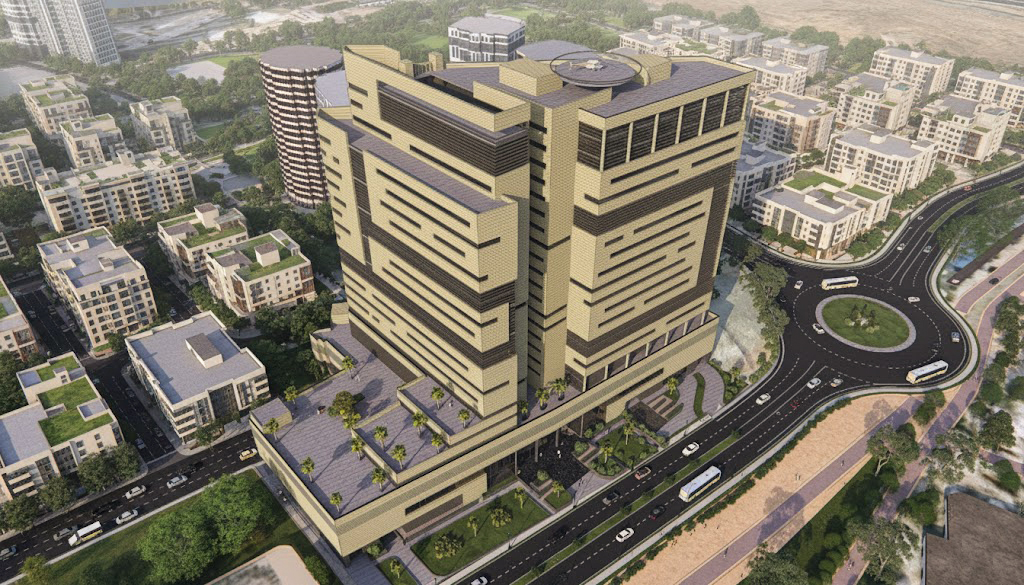
This building is composed of a vast podium base and a high-rise tower situated adjacent to the lake. The main massing is elongated and oriented along the shoreline to maximize scenic views and vistas. On the façade, dominant horizontal lines reinforce both this lengthwise orientation and the core concept, ensuring overall visual cohesion. Furthermore, the variation in window opening patterns across the repetitive façade, despite the emphasis on horizontality, prevents visual monotony and adds to the elevation's dynamism. Functionally, the roof of the lower commercial level (podium) is designated as an active green terrace and courtyard to provide accessible outdoor space, enhancing the working environment and quality of space for the occupants of the upper administrative floors.
Project preview Project name : Kish BazaarKish Bazaar
2015

Project name : Kish BazaarKish Bazaar

Location : Kish Island, Iran

Year: 2015

Project Type:
Architectural competition – Concept design
Year: 2015
Project Description:
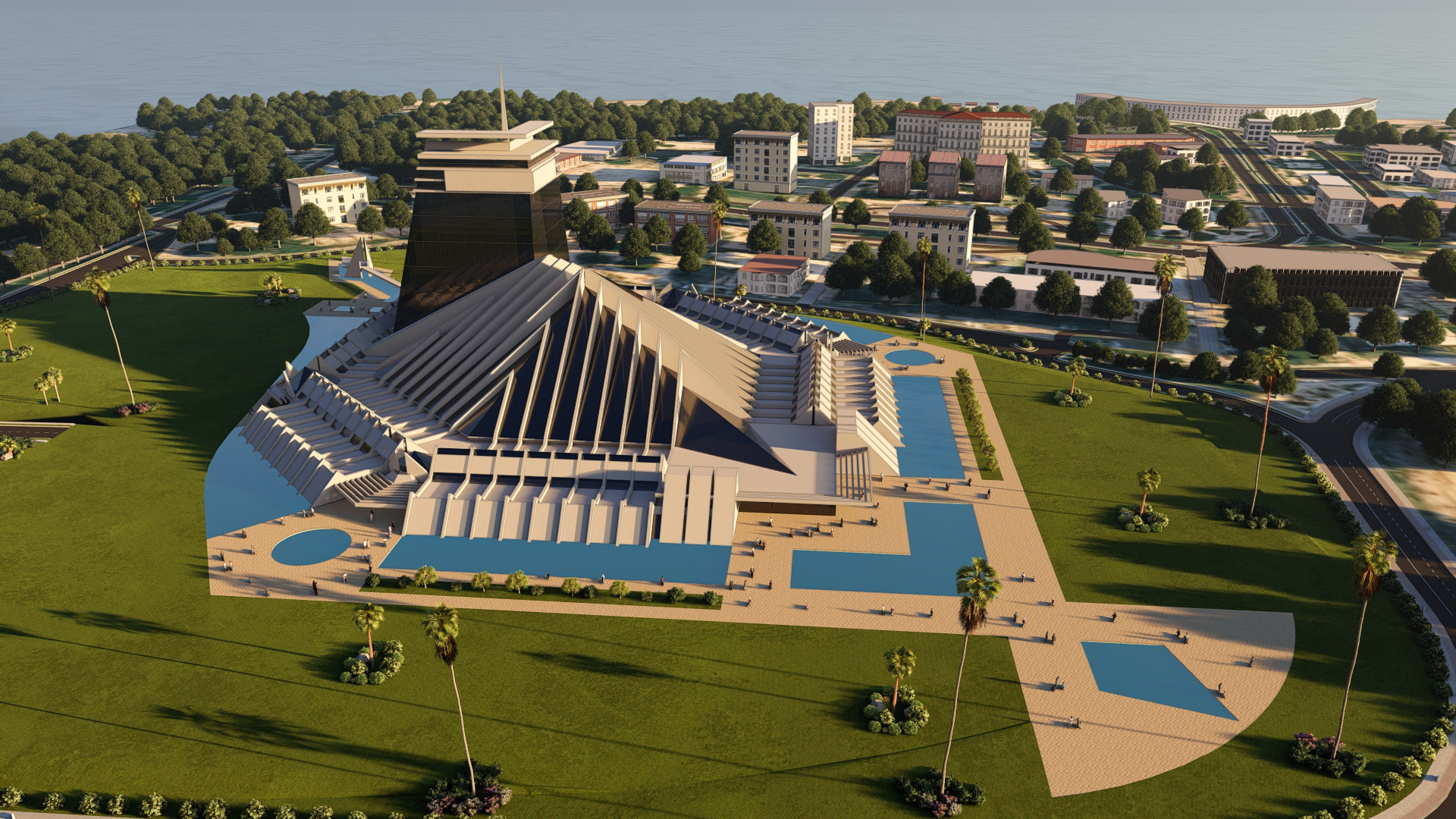
This project was developed as part of an architectural competition focused on the redevelopment of the old Kish Bazaar. The design aimed to reinterpret the traditional market structure while responding to the site’s unique context and potential on Kish Island. The overall concept sought a harmonious relationship between form, function, and the surrounding environment.
The main design approaches can be summarized as follows:
Inspiration from the island and lighthouse concept – The form acts as a visual landmark recognizable from all surrounding areas.
Maximizing natural views – Building massing and height are designed to ensure sea views and visual connections to the landscape from office and public spaces.
Contemporary reinterpretation of the old bazaar – The new design draws on the geometry and spatial patterns of the traditional market, maintaining a sense of cultural continuity.
Climate-responsive design – The use of sea breezes, shading elements, and cantilevered façades enhances thermal comfort and reduces energy demand.
Urban-scale visual integration – The project presents a cohesive and iconic image from all urban viewpoints, including aerial views and the approach from the airport.
Active open spaces – Central courtyards and open plazas are designed to host public events and promote social interaction.
Efficient access and circulation – The main pedestrian entrance is positioned on the southwest side, with service and parking access from the north and secondary entries on other sides.
Fusion of modern and local architecture – Traditional geometries and motifs are reinterpreted through contemporary design principles to reinforce local identity.
Spatial and visual diversity – The composition of solid and void spaces creates a dynamic environment while maintaining clear functional zoning.
Energy efficiency – Controlled natural lighting, extended shading, and passive cooling strategies minimize overall energy consumption.
Project preview Project Name: Ghadir Building, Bank Saderat Iran
2013

Project Name: Ghadir Building, Bank Saderat Iran

Location: Tehran, Somayeh Street, west side of Sepehr Saderat Iran project

Year: 2013

Project Type: Façade Design and Supervision
Area: 26,000 square meters
Year: 2013
Architect and Supervision: Vazna Consulting Engineers
Introduction:
Many buildings that remain from the 1970s in Iran are seen as valuable memories of that era and symbols of national development.
The Sepehr Saderat Iran building, though left unfinished for years, was completed after the war and became one of the first milestones in Iran’s high-rise construction history
This legacy is considered an inseparable part of Iranian architecture.
Design Concept:
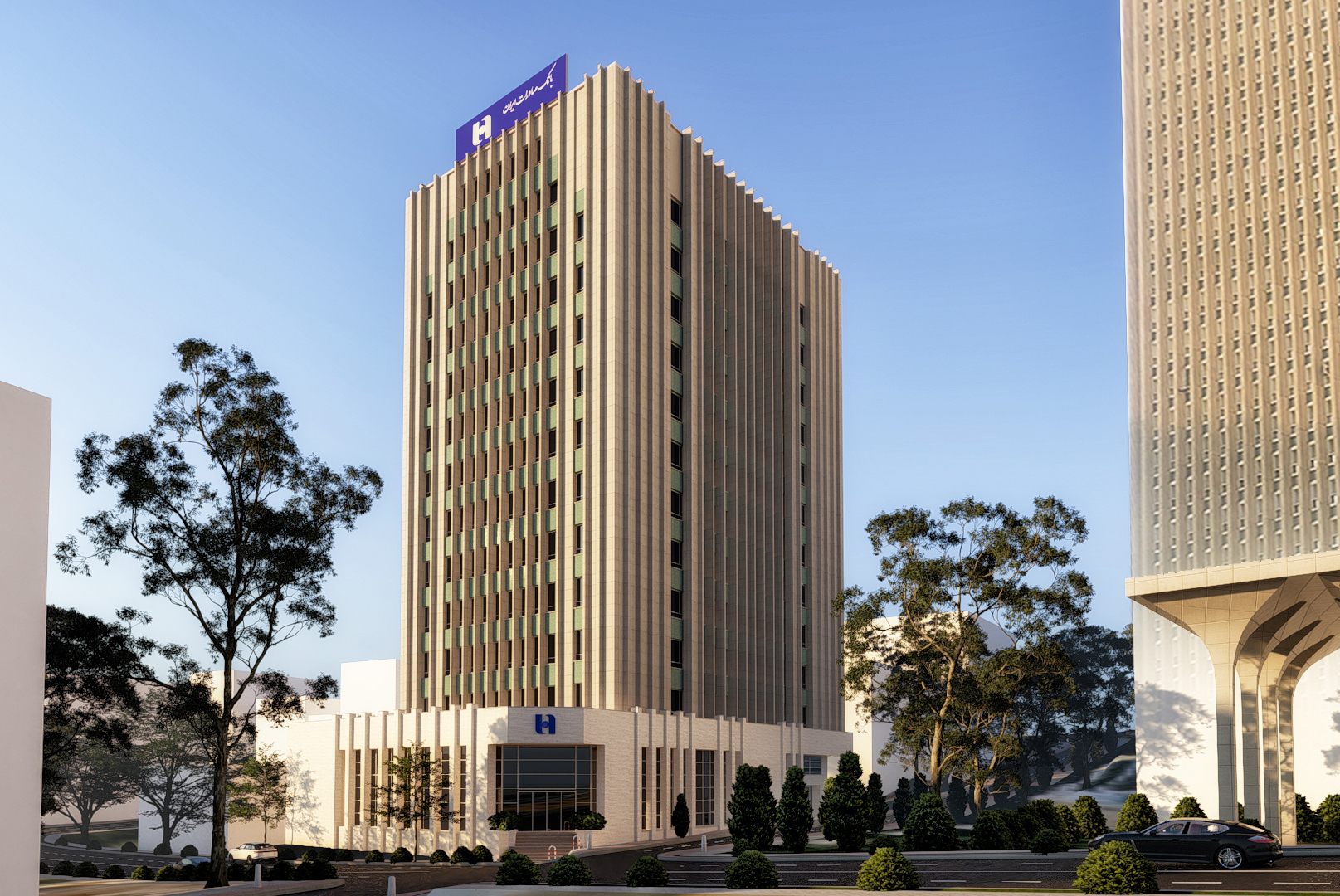
The Ghadir Bank Saderat project, located next to the Sepehr Saderat building, was designed as a contemporary project following the bank’s protocols
In the first phase, all design drawings were developed by Vazna Consulting Engineers based on standard architectural principles used in similar projects
The design responds to modern office needs and the client’s requirements for space dimensions and functional relationships.
In harmony with the nearby Sepehr building, this project features a sharp modern façade inspired by the main building’s architectural character.
As part of the urban fabric, the building acts as a background structure that complements this valuable heritage while giving pedestrians a sense of modern city.